
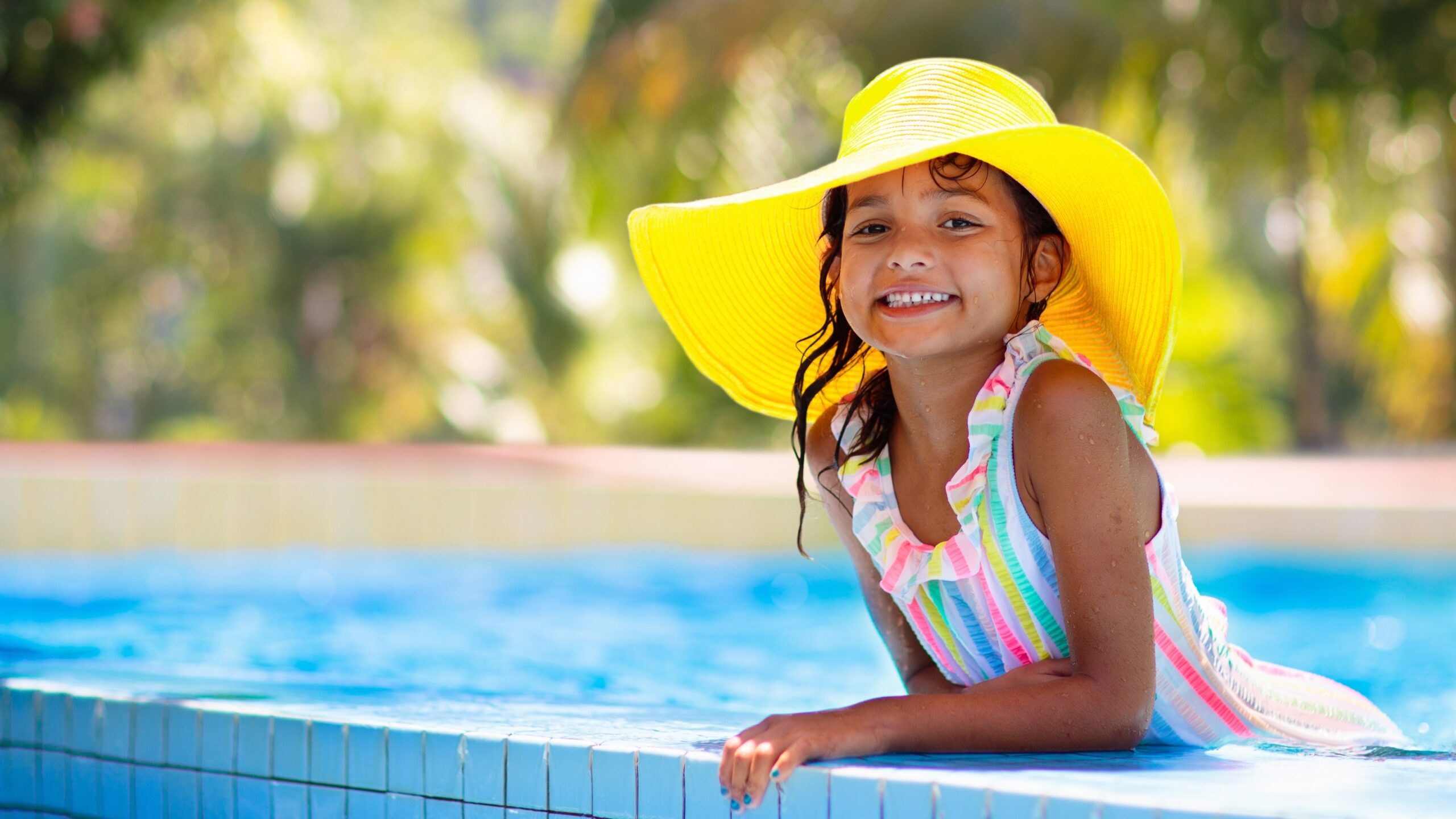

I wish it could be summer all year long! I love swimming, the sun, and long days. As a pediatrician, I love seeing children active and enjoying the season too. I field many questions about summer safety this time of year. With a few thoughtful precautions, families can dramatically reduce risks while still having plenty of fun.
Sun Protection
Children’s skin is more sensitive to ultraviolet (UV) radiation than adults’, meaning sunburns can happen quickly and have long-term consequences.
- Use broad-spectrum sunscreen (SPF 30 or higher) on all exposed skin. Apply it 15–30 minutes before going outside and reapply every two hours—or more often if swimming or sweating.
- Don’t forget easy-to-miss spots like ears, the back of the neck, the tops of feet, and lips.
- Dress for protection: lightweight long-sleeve shirts, wide-brimmed hats, and UV-blocking sunglasses offer excellent added defense.
- Time outdoor play wisely: try to limit peak times of direct sun exposure between 10 a.m. and 4 p.m., when UV rays are strongest.
For infants and children under 12 months, direct sun exposure should be avoided whenever possible. Shade and protective clothing are your best tools; use minimal sunscreen on small, exposed areas, if necessary.
Hydration
Kids can become dehydrated faster than adults, especially when they’re busy playing and don’t recognize thirst cues.
- Encourage frequent water breaks, even if your child says they’re not thirsty.
- Offer water-rich snacks like watermelon, oranges, or cucumbers.
- Be cautious with sugary or caffeinated drinks, which can worsen dehydration. I don’t ever recommend them for kids!
A simple rule: if your child’s urine is dark yellow, they likely need more fluids. If your child’s urine is more clear, this is a good sign they are hydrated. Make sure to take them to the potty frequently at the pool so the pool doesn’t fill up with urine! Gross!
Pool Safety
Drowning is one of the leading causes of accidental death in children, and it can happen quickly and silently.
- Always supervise. Designate a “water watcher”—an adult whose sole job is to keep eyes on the pool, free from distractions like phones or conversations. Lifeguards are great, but they aren’t perfect.
- Use layers of protection:
- Four-sided pool fencing with a self-latching gate
- Pool alarms
- Locked covers when not in use
- Enroll children in swim lessons or hire a private lesson. Always remember: even strong swimmers need supervision.
- Avoid reliance on floaties or inflatable toys as safety devices—they can create a false sense of security.
For infants and toddlers, remain within arm’s reach at all times when they’re in or near water—what we call “touch supervision.”
Especially at the lake, anytime you are near the water, everyone needs a life jacket! Murky water is more dangerous for those who cannot swim.
Signs of Heat-Related Illness
Children are more vulnerable to heat exhaustion and heatstroke.
Watch for:
- Fatigue or unusual sleepiness
- Dizziness or headache
- Nausea or vomiting
- Flushed or unusually pale skin
If symptoms appear:
- Move your child to a cool, shaded area.
- Offer fluids
- Use cool compresses
Seek medical attention immediately if your child shows confusion, stops sweating, or loses consciousness.
If you ever have concerns about sun exposure, hydration, or water safety, don’t hesitate to reach out to us at Parkside! Prevention is always easier—and safer—than treatment.
3 John 2 – Beloved, I pray that you may prosper in all things and be in health, just as your soul prospers
